

Why PLA Isn't Actually Compostable (And What Is)
The uncomfortable truth about the most popular "compostable" plastic—and the alternatives that actually work.
TL;DR
- PLA (polylactic acid) requires industrial composting facilities at 140°F+ to break down—conditions most consumers can't access
- In home compost, landfills, or oceans, PLA persists for decades just like conventional plastic
- A 428-day marine study showed zero degradation of PLA in seawater
- Many composting facilities actively reject PLA because they can't distinguish it from regular plastic
- True home compostable alternatives exist—materials certified to break down in backyard compost piles within weeks
The Compostable Packaging Promise
Walk down any grocery aisle and you'll see it: the green leaf icon, the word "compostable" printed proudly on cups, cutlery, and food containers. It feels good to choose these products. You're doing the right thing for the planet.
But here's the uncomfortable truth: most "compostable" packaging will never actually compost.
The majority of compostable food service items are made from PLA—polylactic acid—a bioplastic derived from corn starch. PLA has become the darling of the sustainable packaging industry, with over 150,000 metric tons produced annually. It looks like plastic, feels like plastic, and performs like plastic.
The problem? It also acts like plastic when it comes time to dispose of it.
What PLA Actually Needs to Decompose
PLA is technically compostable. But that technical definition comes with a critical asterisk: it only breaks down under very specific conditions.
The Temperature Problem
PLA requires sustained temperatures of 140°F (60°C) or higher to decompose. This triggers the hydrolysis process that breaks down the polymer chains into lactic acid, which microorganisms can then consume.
Here's the problem: home compost piles don't get that hot.
| Composting Environment | Typical Temperature | PLA Decomposition |
|---|---|---|
| Home compost pile | 70-130°F | ❌ No decomposition |
| Industrial composting facility | 140-160°F | ✅ Decomposes in 2-3 months |
| Landfill | 70-100°F | ❌ No decomposition |
| Ocean | 32-80°F | ❌ No decomposition |
A typical backyard compost pile reaches 70-130°F in its hot center—well below what PLA needs. In cooler months or in the outer layers of the pile, temperatures are even lower.
The result: your "compostable" PLA fork sits in your compost pile looking exactly like it did when you threw it in—for years.
The Industrial Composting Infrastructure Gap
"But wait," you might think, "I'll just take my PLA to an industrial composting facility."
Here's the second problem: most people don't have access to industrial composting.
There are approximately 200 industrial composting facilities in the United States that accept food-soiled compostable packaging. That's for a country of 330 million people.
Consider the math:
- 35%+ of US households have access to backyard composting
- Less than 5% have access to industrial composting pickup or drop-off
For the vast majority of Americans, there is no practical way to properly dispose of PLA products. They end up in one of two places:
- The landfill — where they persist indefinitely, just like regular plastic
- The recycling bin — where they contaminate recycling streams because they look like recyclable plastic but aren't
Either way, the environmental benefit evaporates.
Why Composting Facilities Reject PLA
Even if you manage to get your PLA items to an industrial composting facility, there's no guarantee they'll actually be composted.
Many facilities actively reject PLA products.
The reason is practical: workers sorting incoming materials on fast-moving conveyor belts cannot distinguish PLA from conventional plastic. They look identical. They feel identical.
As one composting facility operator put it:
"Anything that looks like plastic is a problem to composters. We can't stop the line to test every cup. If it looks like plastic, it gets pulled and trashed."
Composters face a difficult choice:
- Accept PLA and risk contaminating their finished compost with conventional plastic that slipped through
- Reject anything that looks like plastic, including PLA
Most choose the second option. Your carefully sorted "compostable" items get thrown in the trash anyway.
The Marine Biodegradation Myth
One of the most concerning misconceptions about PLA is that it will safely biodegrade if it ends up in the ocean. Marketing language like "plant-based" and "biodegradable" reinforces this belief.
The science tells a different story.
A peer-reviewed study tracked PLA samples in natural marine conditions for 428 days—over a year submerged in seawater.
The result: zero measurable degradation.
The PLA samples showed no signs of breaking down. No surface erosion. No loss of structural integrity. After more than a year in the ocean, they looked essentially the same as when the study began.
For comparison, the same study found that PHA-based materials (a different type of bioplastic) showed significant degradation under identical conditions.
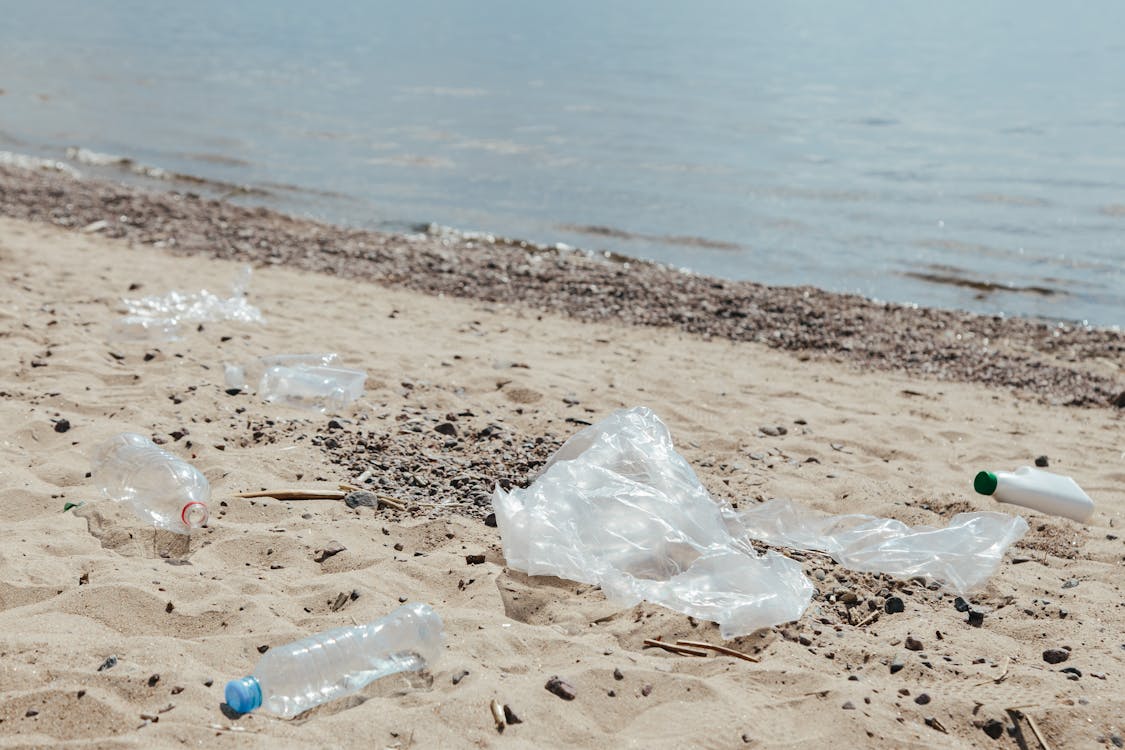
If PLA ends up in the ocean—and millions of tons of plastic packaging do every year—it will persist for decades or centuries, contributing to the same plastic pollution crisis it was supposed to solve.
The Microplastic Problem
There's another issue that's only recently coming to light: PLA may be creating microplastics.
When PLA doesn't fully decompose—which is most of the time, given the conditions it requires—it doesn't just sit there as a whole item. It begins to fragment.
These fragments, smaller and smaller pieces of PLA, can work their way into compost, soil, and waterways. Research is ongoing, but initial evidence suggests that "biodegradable" plastics may release microplastics when they fail to fully mineralize.
This is especially concerning for high-crystallinity PLA variants (cPLA and tPLA), which are engineered to be more heat-resistant. These materials are even harder to compost than standard PLA, requiring higher temperatures and longer exposure times.
The irony: PLA products marketed as "compostable" may actually be introducing microplastics into the compost that gardeners spread on their vegetables.
What "Compostable" Should Actually Mean
The problem isn't the concept of compostable packaging—it's that the term has been stretched to include materials that don't compost under real-world conditions.
True compostability means breaking down where people actually compost: in backyard piles, in countertop composters, in municipal green bins that may or may not reach industrial facilities.
Look for these certifications:
| Certification | What It Means |
|---|---|
| OK compost HOME (TÜV Austria) | Verified to decompose in home compost conditions |
| ASTM D6400 | Designed for industrial/municipal composting |
| ASTM D6868 | Compostable packaging for industrial facilities |
The key distinction: "OK compost HOME" certification means a product will break down in your backyard. ASTM certifications typically mean industrial composting only.
California's AB 1201 now regulates the use of "compostable" and "home compostable" labels, requiring third-party certification. This is a step toward honesty in labeling, but consumers in other states still need to read carefully.
Alternatives That Actually Work
The good news: materials that truly biodegrade in home composting conditions do exist.
PHA-Based Materials
PHA (polyhydroxyalkanoate) is a bioplastic produced through microbial fermentation. Unlike PLA, PHA breaks down in:
- Home compost piles
- Soil
- Marine environments
- Industrial composting facilities
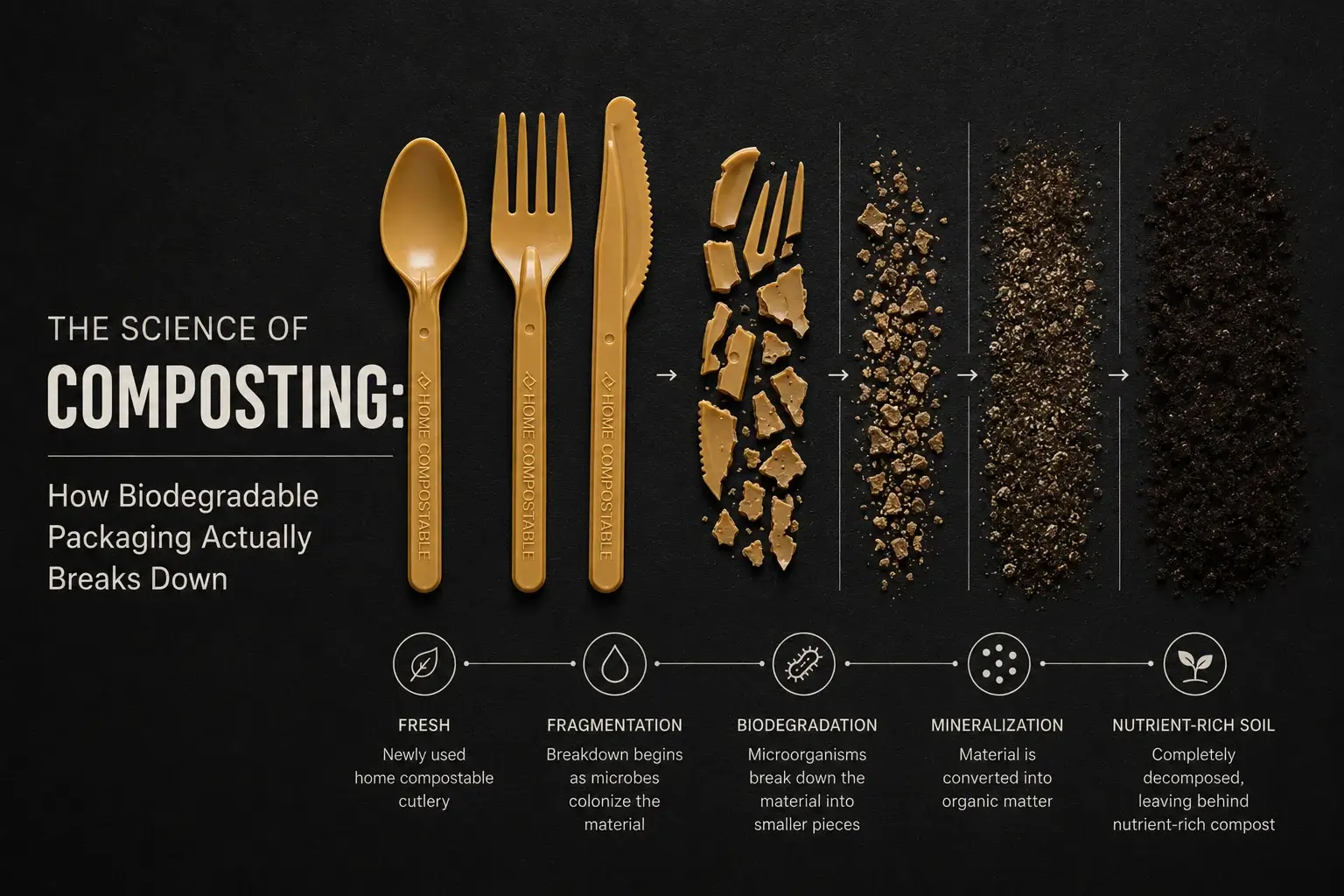
PHA-based products have been shown to decompose in home compost within weeks—not years.
Agricultural Waste Composites
Some newer materials combine PHA with agricultural waste fibers—rice hulls, wheat straw, and other crop byproducts. These composites offer several advantages:
- Home compostable: Break down in ~10 weeks in backyard conditions
- Zero microplastics: Fully mineralize without fragmenting
- Waste feedstock: Use agricultural byproducts instead of food crops like corn
- Marine biodegradable: Degrade safely if they reach waterways
These materials are certified OK compost HOME and have been independently tested to verify their degradation claims.
How to Make Better Choices
For Consumers
- Look for "home compostable" certification, not just "compostable"
- Check for OK compost HOME logo (TÜV Austria certification)
- Be skeptical of PLA unless you have access to industrial composting
- When in doubt, ask: Can this break down in my backyard compost pile?
For Businesses
- Audit your "sustainable" packaging: Is it actually sustainable in practice?
- Consider your customers' disposal options: Do they have access to industrial composting?
- Look for drop-in replacements: True home compostable materials that work with existing equipment
- Prepare for regulation: California's SB 54 requires 100% recyclable or compostable packaging by 2032
The Bottom Line
PLA was a well-intentioned step toward sustainable packaging. But good intentions aren't enough. What matters is what happens to packaging after it's used.
For the vast majority of PLA products, the answer is: they end up in landfills, where they persist like conventional plastic. Or they contaminate recycling streams. Or they sit in home compost piles for years without breaking down.
True sustainability means materials that work in the real world—not just in industrial facilities that most people can't access.
The next time you see "compostable" on a package, ask yourself: compostable where?
If the answer isn't "in my backyard," it might be time to look for a better alternative.
About PlantSwitch
PlantSwitch manufactures truly home compostable food service packaging using proprietary CompostZero™ bio-resin made from agricultural waste. Our products are certified OK compost HOME and break down in approximately 10 weeks in backyard compost conditions—no industrial facility required.
Learn more about home compostable packaging →
Sources: EPA, Normec Group, peer-reviewed marine degradation studies, ASTM International, TÜV Austria, California Legislature (AB 1201, SB 54)