

The Bioplastic That's Actually Made by Living Cells
Most plastics are manufactured from fossil fuels through industrial chemical processes. PHA is different at a fundamental level — it is grown inside living bacteria, the same way an organism stores fat for energy. When you hold a PHA product, you're holding a material that was literally synthesized by microorganisms.
That biological origin is not a marketing angle. It's the reason PHA biodegrades in home compost piles, in soil, and in marine environments — environments where synthetic plastics, including most other "bioplastics," persist for decades. The microorganisms that made PHA can recognize it and break it down.
This guide covers everything you need to know about polyhydroxyalkanoates: the chemistry and biology behind them, how they're produced at commercial scale, the different types and their distinct properties, where PHA is being used beyond food packaging, and why the material is now gaining serious commercial traction after a century of scientific promise.
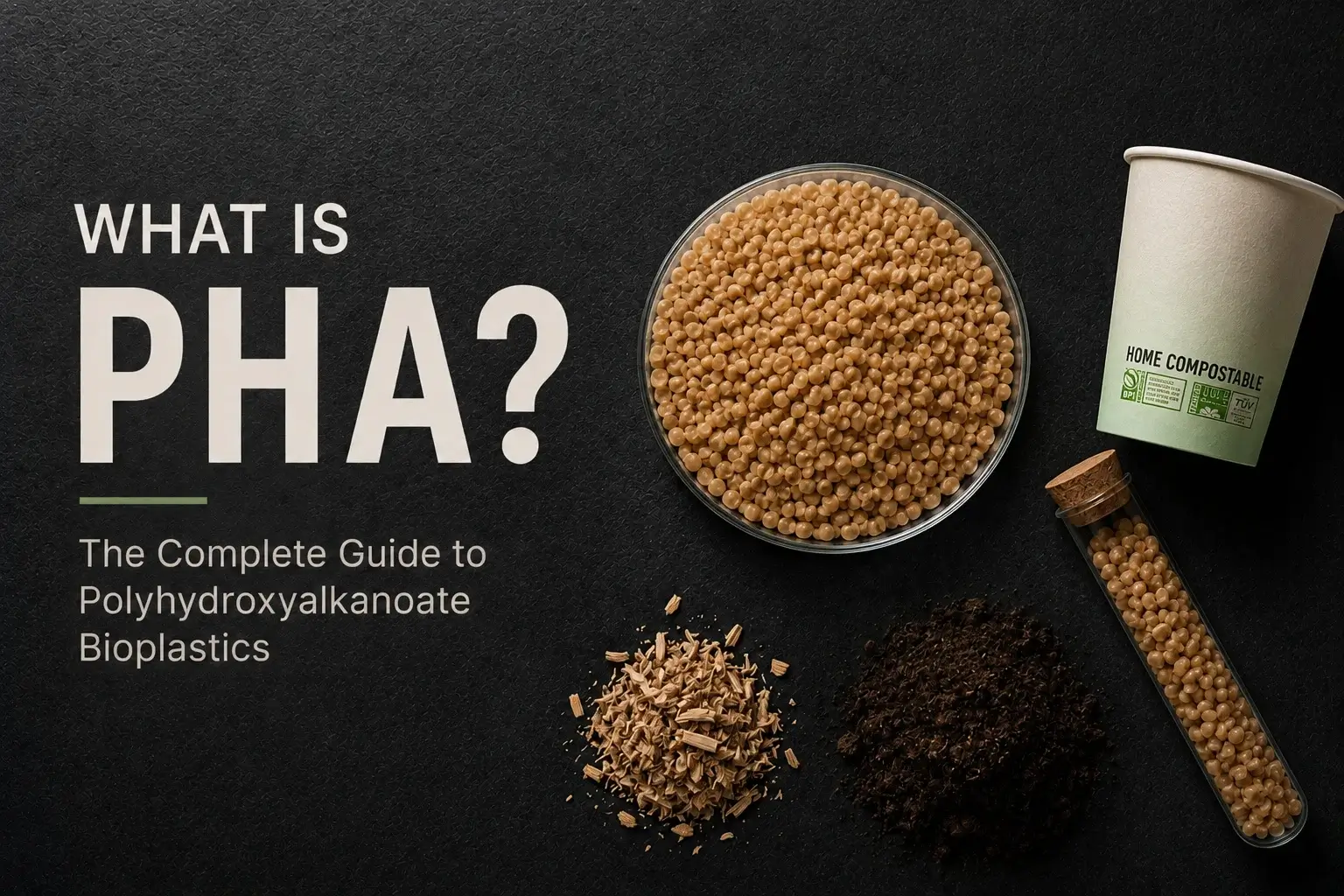
What is PHA? The Chemistry and Biology in Plain Language
PHA stands for polyhydroxyalkanoate — a class of polyester polymers produced naturally by bacteria as an energy storage mechanism. When certain bacteria experience nutrient imbalance (such as a carbon surplus paired with limited nitrogen or phosphorus), they accumulate PHA granules inside their cells as a reserve. These granules can make up 80–90% of a bacterial cell's dry weight under optimal production conditions.
The chemistry: PHA consists of repeating hydroxyalkanoic acid monomer units linked by ester bonds. Depending on the length of the monomer's side chain, the resulting polymer has very different physical properties — from hard and brittle to flexible and elastomeric. This tunability is one of PHA's greatest commercial advantages; the same biological platform can produce a spectrum of materials to replace different conventional plastics.
More than 300 species of bacteria have been identified as PHA producers, including Cupriavidus necator (formerly Ralstonia eutropha), Bacillus megaterium, and Pseudomonas putida. These organisms produce PHA from a wide range of carbon sources — sugars, vegetable oils, organic acids, and increasingly, the sugars extracted from agricultural waste streams like rice straw, wheat straw, and sugarcane bagasse.
Because PHA is a naturally occurring biopolymer, it is recognized and metabolized by the same microorganisms present in soil, compost, and aquatic environments. This is the fundamental reason it biodegrades in conditions where synthetic and chemically-derived "compostable" plastics do not.
The History of PHA: From a French Lab to a Global Market
Discovery: 1926
The story begins at the Pasteur Institute in Paris. In 1926, French microbiologist Maurice Lemoigne was studying Bacillus megaterium when he observed unusual intracellular granules accumulating under certain culture conditions. His meticulous investigation revealed these granules to be a polyester — which he named poly-β-hydroxybutyrate (PHB), the first identified member of what we now call the PHA family.
Lemoigne's discovery attracted almost no commercial attention. Fossil fuels were cheap and abundant. The petrochemical age was in its infancy, and synthetic plastics were being celebrated as a triumph of modern chemistry. PHAs were a scientific curiosity.
Rediscovery: The 1970s Oil Crisis
The first major commercial interest in PHA came in the 1970s, when oil price shocks forced manufacturers to reconsider their dependence on petroleum. Microbiologists flagged PHA as a viable bio-based alternative. Imperial Chemical Industries (ICI) in the UK developed the first commercial PHA under the trade name Biopol, produced by naturally occurring bacteria. ICI's patents were later acquired by Monsanto, then by a Cambridge, MA startup called Metabolix, which developed commercial PHA under the brand Mirel in a joint venture with ADM.
The Commercial False Start: 2000s
Metabolix and ADM built what was briefly the world's largest PHA fermentation plant — a 110-million lb/year facility in Clinton, Iowa. Despite the scale, the venture ran into a common pattern for early-stage materials: the process economics were challenged, purification steps were technically complex, and converting customers from established materials took 9–15 months per account. ADM ultimately dissolved the joint venture in 2012, and Metabolix spent years repositioning PHA as a specialty material rather than a commodity.
The lesson wasn't that PHA was a bad idea. It was that the right feedstocks, fermentation engineering, and market conditions weren't yet aligned.
Why PHA is Viable Now
Three forces converged to make PHA commercially viable in the 2020s:
-
Regulatory pressure. Single-use plastic bans, EPR (extended producer responsibility) laws, and stricter compostable labeling requirements (including California AB 1201) are creating real demand for materials that actually biodegrade — not just in industrial facilities.
-
Feedstock diversification. The shift from food-grade corn sugars to waste streams (agricultural residues, used cooking oil, waste methanol) has significantly reduced production costs and improved the sustainability profile.
-
Fermentation engineering advances. New bacterial strains and optimized fermentation conditions have dramatically increased PHA yield per unit of feedstock, with some engineered strains accumulating PHA at over 95% of cell dry weight.
How PHA is Made: The Production Process
PHA production follows a sequence that starts with biology and ends with a pellet ready for standard manufacturing equipment.
Step 1: Feedstock Selection and Pretreatment
Agricultural residues like rice straw and wheat straw are rich in cellulose and hemicellulose, which must be broken down into fermentable sugars through enzymatic hydrolysis or acid pretreatment. Crop residues serve as economical and sustainable feedstocks for PHA production, and bacteria such as Bacillus megaterium and Cupriavidus necator have demonstrated strong PHA yields from rice straw and wheat straw hydrolysates in research settings.
Vegetable oils and waste cooking oil are increasingly popular feedstocks because they provide high carbon density and are available cheaply as byproducts of food processing. The vegetable oil fermentation segment is projected to grow at the highest CAGR in the PHA market through 2030, driven by its cost-effectiveness and scalability compared to sugar-based pathways.
Step 2: Bacterial Fermentation
Selected bacterial strains are cultivated in bioreactors where the pretreated feedstock serves as a carbon source. The fermentation is controlled for temperature, pH, aeration, and nutrient ratios to maximize intracellular PHA accumulation. Under nutrient-limited, carbon-rich conditions, bacteria divert carbon metabolism toward PHA granule formation.
Fed-batch fermentation — where fresh feedstock is added incrementally rather than all at once — is the predominant industrial approach, as it allows precise control over carbon-to-nitrogen ratios and maintains the conditions that maximize PHA yield.
Step 3: Extraction and Purification
After fermentation, bacterial biomass is separated from the broth through centrifugation. The cells undergo lysis to release the accumulated PHA granules. Traditional extraction uses solvent systems (chloroform was Lemoigne's original method in 1926), but modern industrial processes increasingly use non-halogenated solvents or mechanical disruption to reduce cost and environmental footprint.
The extracted PHA is then purified, dried, and processed into pellets — the standard form factor for downstream manufacturing.
Step 4: Product Manufacturing
PHA pellets are compatible with conventional injection molding, thermoforming, and extrusion equipment — the same machinery used to produce PLA and petroleum-based foodware. This drop-in compatibility is significant: brands and manufacturers don't need to redesign factories to switch to PHA.
Types of PHA: Properties, Differences, and Applications
PHA is not a single material — it's a family of polymers with widely varying properties depending on monomer composition and chain length. The key commercial types are:
PHB (Polyhydroxybutyrate)
The simplest and first-discovered PHA. PHB is composed solely of 3-hydroxybutyrate monomers and has a rigid, highly crystalline structure with properties similar to polypropylene. Crystallinity can reach 70%, giving it a relatively high melting temperature (~169–175°C). The downside is brittleness — PHB's notch impact strength is poor, limiting its use as a standalone material. Applications include packaging films and certain medical uses (biodegradable sutures).
PHBV (Polyhydroxybutyrate-co-valerate)
The first commercially significant PHA copolymer. By incorporating 3-hydroxyvalerate monomers alongside 3-hydroxybutyrate, PHBV achieves a lower melting temperature, reduced crystallinity, improved ductility, and better impact resistance than PHB. PHBV also has good resistance to oils, greases, and solvents, making it useful for food packaging and rigid container applications. It was the basis for ICI's original Biopol product.
PHBHHx (Polyhydroxybutyrate-co-hexanoate)
Adding 3-hydroxyhexanoate monomers to PHB creates a copolymer with significantly greater flexibility and impact resistance. PHBHHx is known for rapid biodegradation in marine environments — making it a candidate for applications where material may contact water. It can be processed via injection molding, thermoforming, and extrusion. PHBHHx is the basis for Kaneka Corporation's PHBH product line (sold as KANEKA Green Planet). In medical research, PHBHHx scaffolds have shown superior osteoblast attachment and proliferation versus both PHB and PLA.
mcl-PHA (Medium-Chain-Length PHA)
Medium-chain-length PHAs contain monomer units with 6–14 carbon atoms. The result is a material with significantly reduced crystallinity and properties resembling elastomers and latex — flexible, sticky, and suited for applications requiring stretch and elongation. Pseudomonas putida is the most widely studied organism for mcl-PHA production. Commercial applications include adhesives, flexible coatings, and blending agents to improve the toughness of brittle scl-PHAs.
PHA Types Comparison Table
| PHA Type | Monomer Units | Key Properties | Primary Applications |
|---|---|---|---|
| PHB | 3-hydroxybutyrate | Rigid, brittle, high crystallinity (~70%), Tm ~169–175°C | Packaging films, medical sutures |
| PHBV | 3-hydroxybutyrate + 3-hydroxyvalerate | Flexible, improved toughness vs. PHB, good solvent resistance | Food packaging, containers, films |
| PHBHHx | 3-hydroxybutyrate + 3-hydroxyhexanoate | Flexible, good impact resistance, rapid marine biodegradation | Food packaging, marine applications, biomedical scaffolds |
| P3HB4HB | 3-hydroxybutyrate + 4-hydroxybutyrate | High elasticity, best flexibility of all PHAs | Medical implants, drug delivery, packaging |
| mcl-PHA | C6–C14 monomers | Elastomeric, low crystallinity, adhesive properties | Adhesives, flexible coatings, impact modifiers |
PHA vs. Other Bioplastics: The Definitive Comparison
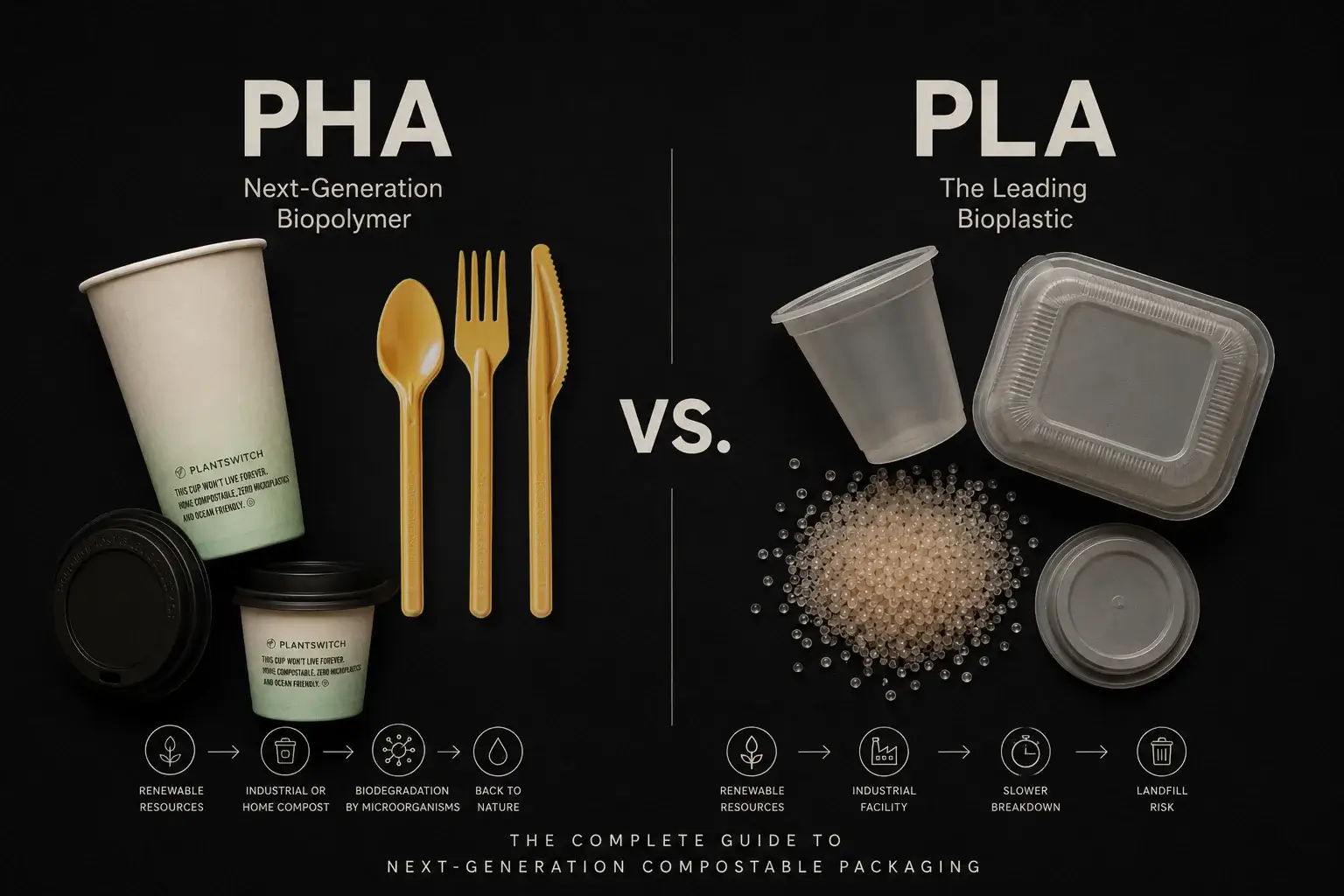
PHA competes in the broader bioplastics space alongside PLA (polylactic acid), PBS (polybutylene succinate), and thermoplastic starch blends. Each material has a distinct profile of properties, end-of-life behavior, and regulatory status.
| Feature | PHA | PLA | PBS | Starch Blends |
|---|---|---|---|---|
| Feedstock | Bacteria + organic carbon (waste streams, oils, ag residues) | Fermented corn/sugarcane starch | Succinic acid + 1,4-butanediol (bio or fossil) | Corn/potato/tapioca starch |
| Marine biodegradation | Yes — fully biodegrades via microbial activity | No — no measurable degradation over 428 days in marine water | Very limited | Very limited |
| Home compostable | Yes — ~7 weeks under favorable conditions | No — requires industrial heat (136–140°F) | No — requires industrial facility | Partial — varies by formulation |
| Soil biodegradation | Yes — at ambient temperatures | No — can persist up to 30 years in soil | Limited | Yes, but may leave residue |
| Heat resistance | Better thermal stability; suitable for hot-fill applications | Poor — softens at 131–149°F | Moderate | Poor |
| Processing compatibility | Injection molding, thermoforming, extrusion | Same | Same | More limited |
| Regulatory status (CA AB 1201) | Not yet compliant — classified as synthetic under NOSB, but strongest candidate for individual approval | Not compliant — excluded under USDA NOP, weaker biodegradation case | Varies | Generally non-compliant |
| Certifications available | TUV Home Compostable, BPI, USDA Certified Biobased | BPI (industrial only) | BPI (industrial only) | Varies |
| Current cost | $4–6/kg (declining with scale) | ~$1.5–2.5/kg (established at scale) | ~$2–4/kg | ~$1–3/kg |
| Microplastic risk | Low — fully metabolized by organisms | High — persists in environment | Moderate | Moderate |
For a deeper comparison of PHA and PLA specifically, see PHA vs. PLA: The Definitive Guide.
Applications Beyond Food Packaging
Food service products — cups, lids, cutlery, straws — are the most visible use case for PHA today. But the material's combination of biocompatibility, tuneable mechanical properties, and true biodegradability is opening applications across multiple sectors.
Biomedical
PHA's biocompatibility makes it one of the few biopolymers approved for in vivo medical use. PHB and PHBV promote cell adhesion from fibroblasts, endothelial cells, and isolated hepatocytes. Applications in active clinical and research development include:
- Biodegradable sutures — PHA-based sutures that absorb into tissue without requiring removal
- Drug delivery microspheres — PHBVHHx microspheres and microcapsules loaded with antibiotics (including tetracycline for periodontal disease treatment)
- Tissue engineering scaffolds — PHBHHx scaffolds for bone, cartilage, nerve, and blood vessel tissue regeneration
- Cardiovascular devices — flexible PHA films for temporary cardiac repair
The FDA cleared three new PHBV medical devices in 2025, sourced from pure-culture production lines at Danimer and Kaneka facilities.
Agriculture
PHA's soil biodegradability without industrial composting infrastructure makes it uniquely suited for agricultural applications where collection at end-of-life is impractical:
- Biodegradable mulch films — PHA films that till directly into the soil after the growing season, eliminating the costly, labor-intensive plastic retrieval that causes significant agricultural plastic pollution
- Slow-release fertilizer coatings — PHA as an encapsulant for controlled nutrient release
- Seed containers and nursery pots — biodegradable planters that can be planted directly
- Twine and agricultural ties — replacing polypropylene in applications where plastic inevitably contacts and contaminates soil
The agricultural sector represented the third-largest share of the overall PHA market in 2024, driven by rising demand for biodegradable soil-compatible materials.
3D Printing
PHA is emerging as a viable sustainable filament for fused deposition modeling (FDM) 3D printing. allPHA filaments are 100% biodegradable and contain no microplastics, with performance characteristics well-suited to additive manufacturing — strong layer-to-layer adhesion, stability at high temperatures (>120°C), and the ability to print on a cold bed without a heated build plate.
Unlike PLA filaments, which require specific end-of-life conditions to biodegrade, PHA-printed objects that end up in soil or water will degrade through natural microbial activity — a meaningful property for applications like agricultural parts, marine components, and consumer goods.
Textiles and Fibers
A 2025 review in ACS Sustainable Resource Management examined PHA's use in biodegradable fibers for textiles, medical implants, and nonwoven fabrics. PHA fibers satisfy ASTM biodegradation standards, making them relevant for applications where synthetic fiber pollution — particularly microfiber shedding into waterways — is a concern. Potential applications include clothing, medical textiles (including personal protective equipment), and nonwoven materials for hygiene products.
The PHA Market: Size, Growth, and Key Players
Market Size and Projections
The global PHA market is growing rapidly from a relatively small base. According to MarketsandMarkets, the PHA market is projected to grow from USD 123.8 million in 2025 to USD 265.2 million by 2030, at a CAGR of 16.5%. Mordor Intelligence projects volume growing from 58.89 kilotons in 2026 to 170.14 kilotons by 2031, a 23.64% CAGR.
Key demand drivers include: tightening single-use plastic regulations globally, ESG commitments from CPG and food service brands, and the steady movement of composting infrastructure toward materials that meet real-world biodegradation standards.
Major Producers
The PHA market is currently moderately concentrated, with approximately 65% of global production capacity sitting with four major players:
- Danimer Scientific (US) — operates a 110,000-ton facility in Bainbridge, Georgia, the world's largest single PHA plant. Bacardi partnered with Danimer for PHA-based bottles. Danimer Scientific
- Kaneka Corporation (Japan) — produces PHBH (sold as KANEKA Biodegradable Polymer and Green Planet) from vegetable oils at its Takasago factory, with a ¥12.4 billion investment to expand PHBH capacity
- RWDC Industries (Georgia, US) — produces PHBH-based biopolymers; has a 160,000-ton offtake agreement with Cove bottled water, the largest single PHA agreement on record
- CJ Biomaterials (South Korea/US) — formerly CJ CheilJedang; produces PHBV-based resins
- Bluepha Co. (China) — expanding from 5,000 tons/year to a targeted 75,000 tons across packaging, cutlery, fibers, and agricultural films
- Newlight Technologies (US) — produces AirCarbon PHA from greenhouse gases
- Biomer (Germany) — long-established PHB and PHBV producer for specialty applications
Regional Outlook
North America is currently the second-largest market by value, anchored by Danimer's large U.S. production base. Asia-Pacific is forecast to grow at the fastest CAGR of 24.72% through 2031, driven by China's marine-degradability standards and India's nationwide single-use plastic ban. Kaneka (Japan) is investing aggressively to capture regional demand with its PHBH products.
Environmental Benefits: Lifecycle Analysis and End-of-Life
Carbon Footprint
PHA's carbon footprint depends heavily on feedstock and energy source, but the picture is directionally positive. The cradle-to-grave carbon footprint of PHA derived from waste cooking oil can be reduced to half that of fossil-based plastics. The carbon originally fixed by the plant feedstock is returned to the biosphere via biodegradation — unlike fossil-based plastics, where combustion or incineration releases ancient carbon that was previously sequestered underground.
Key factors in PHA's LCA performance: - Feedstock matters most: Waste streams (agricultural residues, used cooking oil) carry significantly lower environmental burden than food-grade corn or sugar - Energy source: PHA fermentation is energy-intensive; clean electricity substantially reduces the climate footprint - End-of-life pathway: Biological degradation in soil or compost releases biogenic CO₂, while incomplete degradation in landfill can release methane. Complete biodegradation under aerobic conditions is the optimal outcome.
Using waste or low-value agricultural streams as feedstock — rather than purpose-grown crops — inherently provides an ecological advantage according to GO!PHA's comprehensive LCA review.
Biodegradation Across Environments
Unlike PLA, which shows no measurable degradation in marine environments over 400+ days, PHA is recognized and metabolized by aquatic microorganisms. Unlike industrial-compost-only materials, PHA doesn't require a specific temperature threshold to activate biodegradation. The same microbial pathways that break down organic matter in soil, compost, and water can break down PHA.
This has a meaningful practical implication: packaging that escapes designed end-of-life pathways — which happens constantly — will actually degrade rather than persist. For a material claiming environmental benefit, real-world biodegradation without infrastructure dependence is the only defensible position.
No Microplastic Legacy
Conventional and chemically-synthesized plastics (including PLA outside of industrial composting conditions) fragment into microplastics as they physically break down without fully mineralizing. PHA undergoes complete biological mineralization — it is consumed by microorganisms, not just fragmented. The result: no microplastic residue. For brands concerned about the full lifecycle of their packaging, this is a materially different outcome. For more on the microplastics issue, read Microplastics: PLA vs. PHA.
Current Challenges: Cost, Scalability, and Processing
PHA's technical advantages are well-established. The material's commercial trajectory is real. But intellectual honesty requires acknowledging the challenges that remain.
Cost
PHA currently costs between $4–6/kg, compared to $1–2/kg for conventional petroleum plastics. In China, where PHA production has scaled most aggressively, market prices were around $5,500/ton in recent years — roughly 5–7 times the cost of polypropylene. This premium is the primary barrier to broader adoption in cost-sensitive commodity applications.
The cost gap is closing as production scales, fermentation yields improve, and waste feedstocks replace food-grade inputs. But buyers pricing a full transition to PHA should budget a premium over PLA and petroleum alternatives — and validate that their customers and regulatory trajectory justify it.
Processing Complexity
PHA has a narrower processing window than PLA. Some grades exhibit thermal sensitivity that requires tighter temperature control during injection molding and extrusion. The material can degrade if held at processing temperature too long. Early commercial producers (including Metabolix) found that customer onboarding — getting a converter comfortable with PHA's processing parameters — took 9–15 months per account.
Processing has improved substantially with newer grades, and PlantSwitch's CompostZero™ resin is formulated for compatibility with standard commercial equipment. But the learning curve is real and worth factoring into implementation timelines.
Scalability
Global PHA production capacity remains a fraction of PLA or conventional plastic capacity. The largest single PHA facility (Danimer's Bainbridge plant) is 110,000 tons/year — large for PHA, but modest compared to mature polymer industries. Supply chain reliability during rapid demand growth is a legitimate consideration for large buyers. Vertical integration — controlling the full chain from resin to finished product — is one way to insulate against supply volatility.
Where PlantSwitch Fits in the PHA Landscape
Most PHA producers operate as resin suppliers: they make the polymer, sell it to compounders or converters, and have no visibility into what products eventually reach consumers or how those products perform. PlantSwitch takes a different approach.
PlantSwitch produces its own CompostZero™ PHA resin from upcycled agricultural waste — rice hulls and wheat straw — feedstocks that would otherwise have no commercial value after harvest. This isn't food-grade corn or petroleum. It's a material made from what would otherwise be discarded.
That resin goes directly into finished products that PlantSwitch also manufactures in-house: cutlery, straws, stirrers, lids, cups, containers, and custom OEM formats. The vertical integration means full traceability at every step, no supply chain intermediaries, and the ability to work directly with customers from spec through delivery.
In a market where most compostable packaging is assembled from third-party resins through contract manufacturers, that's a structural rarity. It also means PlantSwitch products carry a complete certification stack — TUV Home Compostable, BPI, Compost Alliance, and USDA Certified Biobased — with documentation to support every claim.
For distributors and food service operators consolidating vendors, PlantSwitch offers something else the PLA market never could: a single supplier that covers the entire compostable product line, resin to finished goods, without routing through middlemen. As regulatory pressure on PLA intensifies, that's a supply chain structure worth understanding. See how PHA compares to PLA across every dimension that matters to a sourcing decision.
PHA Sourcing Checklist: What to Verify Before You Buy
If you're evaluating PHA suppliers — whether for food service packaging, biomedical applications, or agricultural products — here's a checklist for cutting through the noise:
Material claims: - [ ] Is the product TUV Home Compostable certified (not just BPI/industrial)? - [ ] Does the supplier provide documented biodegradation data for home compost, soil, and marine environments? - [ ] Is the USDA Certified Biobased content percentage documented? - [ ] Is the product compliant with California AB 1201 (effective June 30, 2027)?
Feedstock and sustainability: - [ ] What is the carbon source? (Waste/ag residue feedstocks carry lower environmental burden than food-grade crops) - [ ] Is the production process third-party verified? - [ ] What energy sources power fermentation?
Supply chain: - [ ] Does the supplier manufacture finished products in-house, or source through contract manufacturers? - [ ] Can they supply your full compostable product range from a single vendor relationship? - [ ] What is their production capacity and lead time reliability?
Processing: - [ ] Is the resin compatible with your existing injection molding or thermoforming equipment? - [ ] Does the supplier provide processing guidelines and technical support?
The Bottom Line on PHA
PHA was discovered in 1926 but is only now achieving commercial scale. The delay wasn't a failure of the science — the chemistry was sound from the beginning. It was a failure of economics and timing. Cheap petroleum made bio-based materials unnecessary. Early production routes relied on food-grade feedstocks that kept costs high. And the regulatory and market conditions that now reward genuine biodegradability simply didn't exist.
Those conditions exist today. Plastic bans, EPR laws, composting infrastructure that rejects PLA, greenwashing litigation, and consumer pressure for packaging that actually performs as labeled — all of these forces are pulling the market toward a material that biodegrades in any environment, leaves no microplastics, and carries certification documentation that holds up to scrutiny.
PHA is what compostable packaging was supposed to be. The guide you just read is the reason.
Ready to See CompostZero™ PHA in Person?
Request a PlantSwitch sample kit to evaluate PHA cutlery, straws, lids, cups, and containers in your own hands — all certified home compostable, USDA Biobased, and made from upcycled agricultural waste.
Or download the PHA Whitepaper for full technical specifications, certification documentation, LCA data, and regulatory compliance guidance for your sustainability and legal teams.
Request a Sample Kit → | Download the Whitepaper →
Related Reading: - PHA vs. PLA: The Definitive Guide to Choosing Compostable Packaging - Why PLA Isn't Really Compostable - Microplastics: PLA vs. PHA - Industrial vs. Home Composting: What's the Difference? - The Complete EPR Compliance Guide for Compostable Packaging - Compostable Packaging ROI: Building the Business Case